

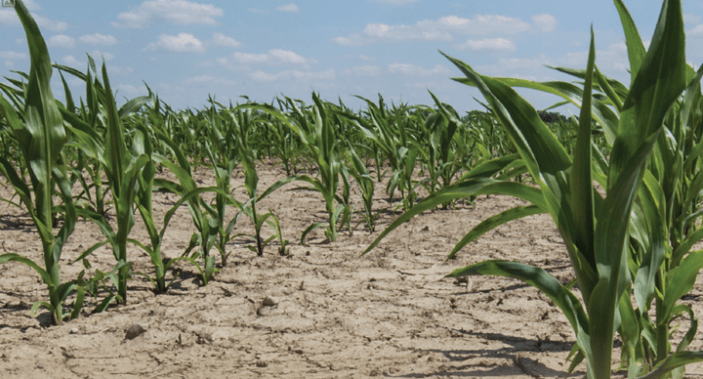
A global poll of climate scientists published by The Guardian newspaper in the UK in May indicated that global temperatures could rise at least 2. 5 degrees Celsius beyond preindustrial levels during this century. That rise is expected by 77% of survey respondents, and almost half anticipated the increase in temperature to be a minimum 3.0 degrees Celsius.
The implications for the planet, its people, and business are profound — not least for the production of essential food crops, metals, and minerals.
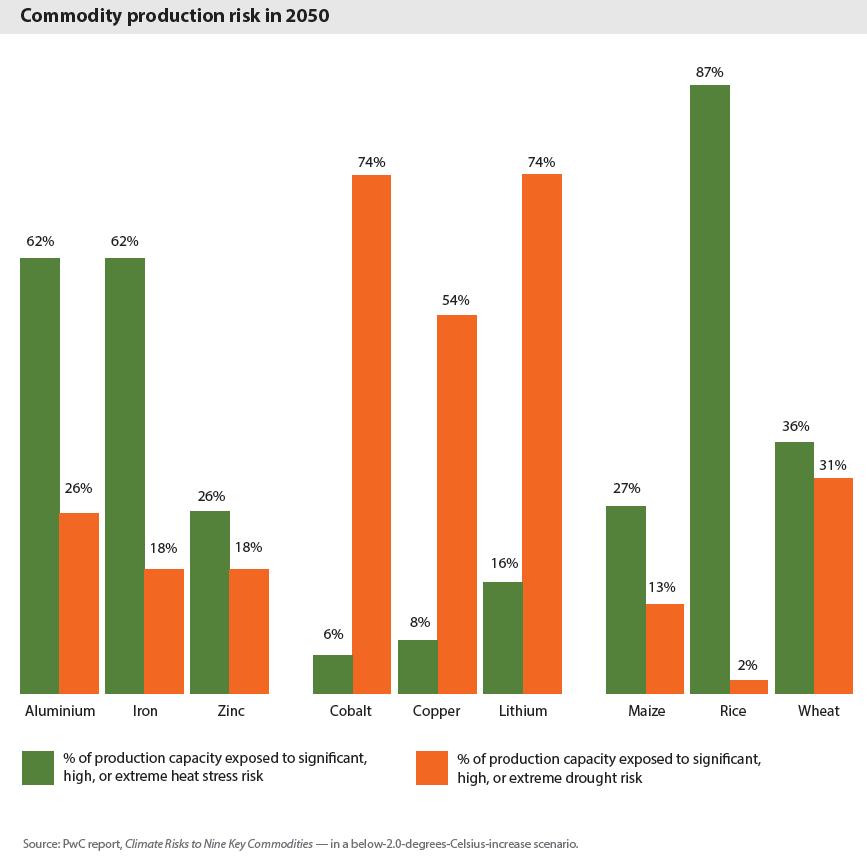
A PwC report, Climate Risks to Nine Key Commodities, examines how drought and heat stress have the potential to negatively affect farming and mining of nine commodities the researchers consider “essential to the global economy”:
- Aluminium (from mined bauxite), iron, and zinc — used in manufacturing, transport, and infrastructure.
- Cobalt, copper, and lithium — used in electronics and clean-energy technologies.
- Maize, rice, and wheat — accounting for 42% of calories people consume globally.
The production risk is further complicated by the geographical concentration of production in a few countries and often a small number of regions within those countries. According to the PwC report, five mines (in the Democratic Republic of Congo) produced most of the world’s cobalt (2020 figures). And, globally, 81% of lithium, 50% of bauxite, and 44% of iron were each sourced from ten or fewer mines.
However, nearly half of CEOs (47%) are taking action to protect employees and assets from climate-related risks, according to the PwC report.
The World Economic Forum — together with PwC — produced a framework to accelerate business action on climate change adaptation in three areas: (1) enhancing resilience by identifying and managing risks; (2) capitalising on opportunities; and (3) shaping collaborative outcomes.
AICPA & CIMA RESOURCE
Report
Accounting for Climate Resilience, June 2023
