

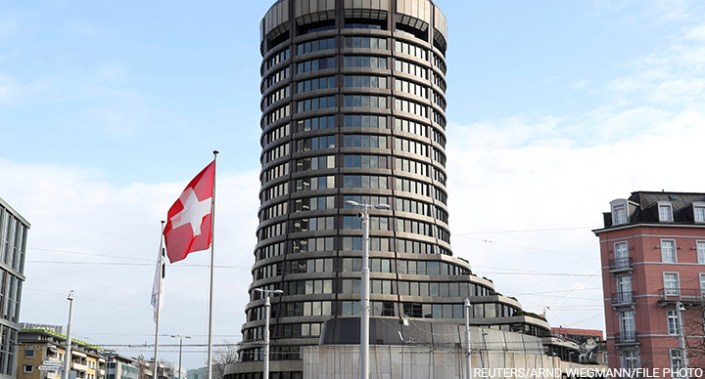
Two dozen central banks across emerging and advanced economies are expected to have digital currencies in circulation by the end of the decade, the Bank for International Settlements (BIS) found in a survey published on Monday.
Central banks around the globe have been studying and working on digital versions of their currencies for retail use to avoid leaving digital payments to the private sector amid an accelerating decline of cash. Some are also looking at wholesale versions for transactions between financial institutions.
Most of the new central bank digital currencies (CBDCs) will emerge in the retail space, where 11 central banks could join peers in the Bahamas, the Eastern Caribbean, Jamaica, and Nigeria, which already run live digital retail currencies, the BIS found in its survey of 86 central banks conducted late 2022.
On the wholesale side, which, in the future, could allow financial institutions to access new functionalities thanks to tokenisation, nine central banks could launch CBDCs, the BIS said.
“Enhancing cross-border payments is among the key drivers of central banks’ work on wholesale CBDCs,” the report’s authors wrote.
The Swiss National Bank said in late June it would issue a wholesale CBDC on Switzerland’s digital exchange as part of a pilot, while the European Central Bank is on track to begin its digital euro pilot ahead of a possible launch in 2028. Pilot testing in China reaches 260 million people and two other big emerging economies, India and Brazil, plan to launch digital currencies next year.
The BIS also said that the share of central banks in its survey engaged in some form of CBDC had risen to 93%, with 60% saying the emergence of stablecoins and other cryptoassets had accelerated their work.
There has been turmoil in the crypto market in the past 18 months, including the failure of TerraUSD, an unbacked stablecoin, in May 2022, the collapse of crypto exchange FTX in November and the bankruptcy of banks such as Silicon Valley Bank and Signature Bank, which serviced crypto providers.
While these developments had no major impact on traditional financial markets, they led to sell-offs in multiple types of cryptoassets.
Almost 40% of respondents indicated that their central bank or other institutions in their jurisdiction recently carried out a study on the usage of stablecoins and other cryptoassets among consumers or businesses, the survey found.
“If widely used for payments, cryptoassets including stablecoins may constitute a threat to financial stability,” the BIS report said.
